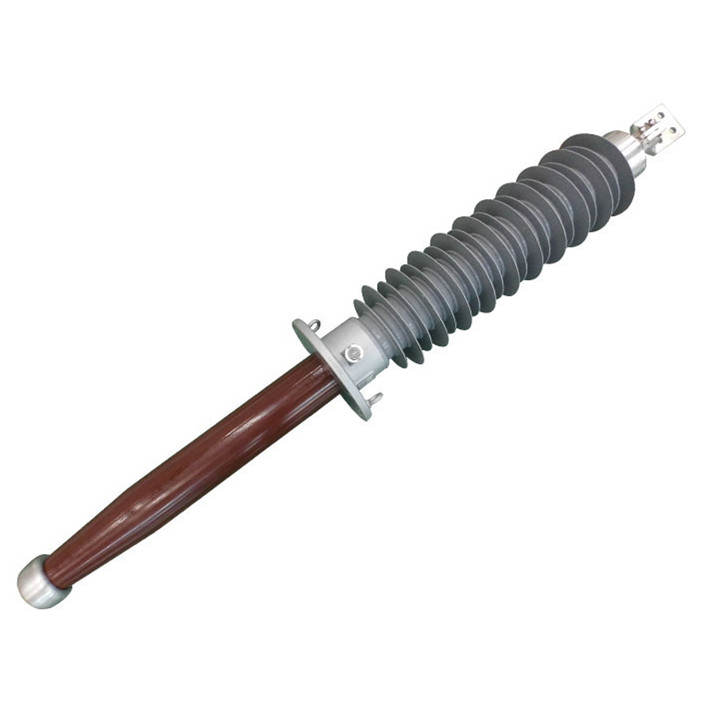

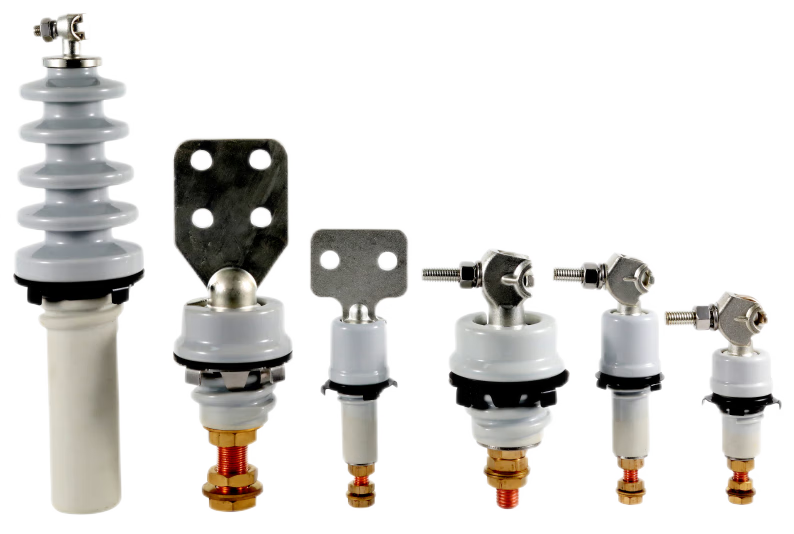

There are five types of insulators used in transmission lines as overhead insulation:
Pin, suspension, and strain insulators are used in medium- to high-voltage systems. Stay and shackle insulators are mainly used in low-voltage applications.
Pin insulators are among the earliest developed overhead insulators, but they are still commonly used in power networks up to 33 kV. A pin type insulator can be made in one, two, or three parts, depending on the application voltage.
In higher-voltage systems, such as 33 kV and 66 kV, manufacturing a one-part porcelain pin insulator becomes more difficult. The higher the voltage, the thicker the insulator must be to provide sufficient insulation. A very thick single-piece porcelain insulator is not practical to manufacture.

At voltages beyond 33 kV, using pin insulators becomes less economical because the size and weight of a single unit increase. Handling and replacing a larger single-unit insulator can also be difficult. Suspension insulators were developed to overcome these limitations.
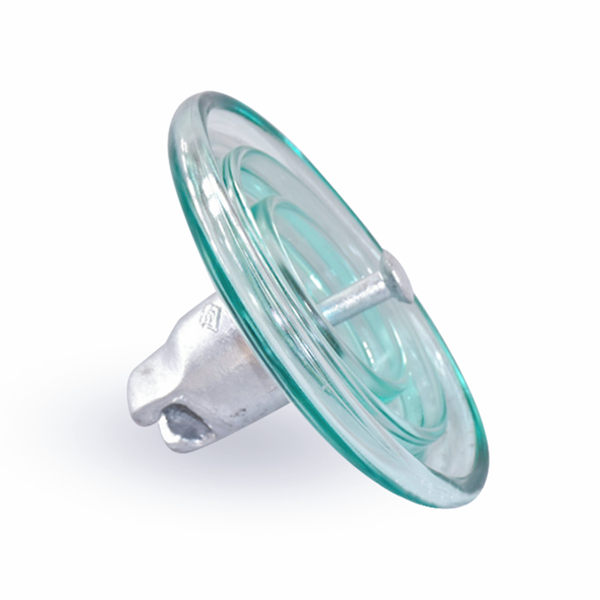
In a suspension insulator arrangement, several insulator units are connected in series to form a string. The line conductor is carried by the bottom unit. Each unit in a suspension string is commonly called a disc insulator because of its disc-like shape.

When a suspension string is used to withstand a high tensile load from the conductor, it is referred to as a strain insulator arrangement. At a dead end or a sharp corner in a transmission line, the conductor creates substantial tensile force. A strain insulator must therefore provide considerable mechanical strength as well as the required electrical insulation performance.

For low-voltage lines, stay wires are insulated from ground at a specified height. The insulator used in the stay wire is called a stay insulator. It is usually made of porcelain and designed so that, in the event of breakage, the guy wire will not fall to the ground.
The shackle insulator, also known as a spool insulator, is usually used in low-voltage distribution networks. It can be installed in either horizontal or vertical positions. Its use has decreased in some areas as underground cable systems have become more common for distribution applications.
The tapered hole of a spool insulator distributes load more evenly and helps reduce the possibility of breakage when heavily loaded. The conductor is secured in the groove of a shackle insulator with soft binding wire.
The types of insulators used in transmission lines explain the basic construction and installation roles. However, project selection requires more than choosing an insulator type by name. Buyers should consider operating voltage, conductor load, tower position, local pollution, climate, and applicable utility standards. These conditions determine whether transmission line insulators should use a suspension string, a strain arrangement, or a compact distribution design.
For medium-, high-, and extra-high-voltage overhead line insulators, suspension insulators are commonly assembled into strings. Each disc unit contributes insulation distance and mechanical capacity. This allows engineers to configure an insulator string for the required voltage, span loading, and tower arrangement.
When comparing types of disc insulator units, purchasers should confirm the specified mechanical load, coupling hardware, string length, power-frequency performance, and impulse requirements. The IEC 60383-1 standard provides requirements for ceramic and glass insulator units used on AC overhead lines above 1 kV.
For suspension-string applications, NJREC’s toughened glass disc insulators provide a suitable product option. Buyers should include system voltage, required mechanical load, fitting type, string configuration, and project drawings when requesting a quotation.
Stay insulators and shackle insulators remain relevant for selected low-voltage distribution applications. A stay insulator helps isolate part of a guy wire, while a shackle insulator can support a conductor at a short span, service connection, or direction change.
These distribution insulators have a different duty from suspension strings and should not be specified as substitutes for high-voltage transmission insulators. Identifying the installation location early helps buyers select the correct insulator type and hardware arrangement.
For insulators used in overhead lines, environmental conditions can be as important as nominal voltage. Coastal salt, industrial contamination, frequent rain, desert dust, and ice-prone locations can affect leakage-current risk and the required creepage distance. The IEC 60815 guidance supports pollution-based selection and dimensioning for ceramic and glass insulators.
Where a project has heavier contamination, buyers may evaluate profile options such as fog-type glass insulators. The final selection should be verified against utility approval requirements and the project specification.
A complete RFQ for transmission insulators should state the line voltage, installation location, mechanical duty, pollution severity, required standards, quantity, fittings, drawings, delivery destination, and target schedule. This information allows suppliers to recommend a technically suitable option from the NJREC glass insulator range and provide a more accurate quotation.