
Extended creepage focus
Fog and anti-pollution profiles can be considered where salt-laden air or persistent moisture increases surface contamination concerns.

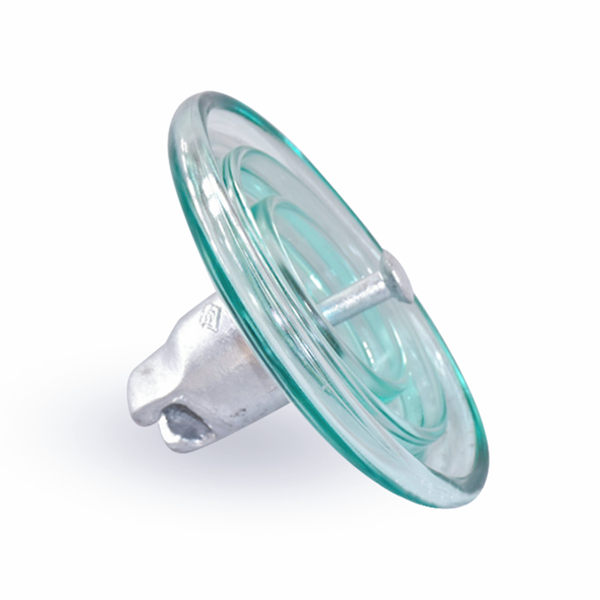
Standard Type Glass Insulator · Item No. 00330
Specify toughened glass insulators around line voltage, mechanical loading and exposure conditions. Glass insulator manufacturers can use the same conversation to align profile geometry, fitting details and project requirements.

Start with the line environment
The product range identifies profile options for different contamination, moisture and line-maintenance conditions. These three paths keep the selection conversation grounded in operating exposure.
Fog and anti-pollution profiles can be considered where salt-laden air or persistent moisture increases surface contamination concerns.
Rib geometry and the self-cleaning behavior described for the glass profiles help frame the choice for contaminated operating areas.
Visible breakage from the zero-value self-breaking feature supports practical inspection planning when access intervals are long.
Load and voltage envelope
The standard cap-and-pin range is listed for high-voltage, extra-high-voltage and ultra-high-voltage transmission lines. Confirm the final profile and rating against the line design.
| Standard | 40–550 kN standard profile |
|---|---|
| Other listed profiles | Fog, Open, Ground and Double Shed options appear in the product range. |
| Configuration point | Use the line's voltage, mechanical load, creepage requirement and exposure condition to define the final request. |
Construction and inspection
The assembly combines toughened glass parts, an iron cap and steel pin with cement adhesive. A soft gasket and tar are used at contact points to buffer thermal expansion and contraction.
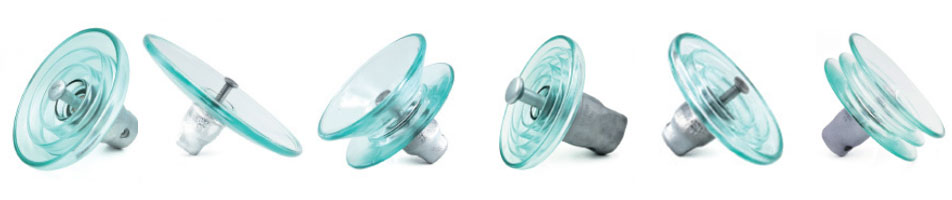
Other NJREC insulator profiles
Each product card opens the corresponding NJREC product detail page.

Explore the dedicated fog-profile product page for exposure-sensitive line planning.
View Fog Profile
Review the double-shed profile where creepage and environmental exposure shape the inquiry.
View Double Shed
Open the dedicated product page to compare an RTV-coated option with the standard profile.
View RTV CoatedRelated reading
Three project-facing readings, each linking to the corresponding NJREC article.
Use this reading to frame voltage class, strength and environmental requirements around the transmission route under review.
Read the articleBring mechanical loading, inspection expectations and utility-project fit into the same supplier conversation.
Read the articleReview the procurement factors that connect profile choice, operating conditions and long-term line planning.
Read the articleFAQ
It combines toughened glass parts, an iron cap and steel pin with cement adhesive; a soft gasket and tar are used at contact points.
Applications include high-voltage, extra-high-voltage and ultra-high-voltage transmission lines from 10 kV to 1000 kV.
The stated standard-profile range is 40 kN to 550 kN; confirm the final rating against the requested line configuration.
The page lists options including Fog, Open, External Shed, Anti-pollution, DC and Ground Wire forms.
Zero-value self-breaking makes internal damage visible as breakage for easier inspection.
Share the target voltage class, mechanical-load requirement, exposure conditions and any needed profile or fitting details through the NJREC contact page.

