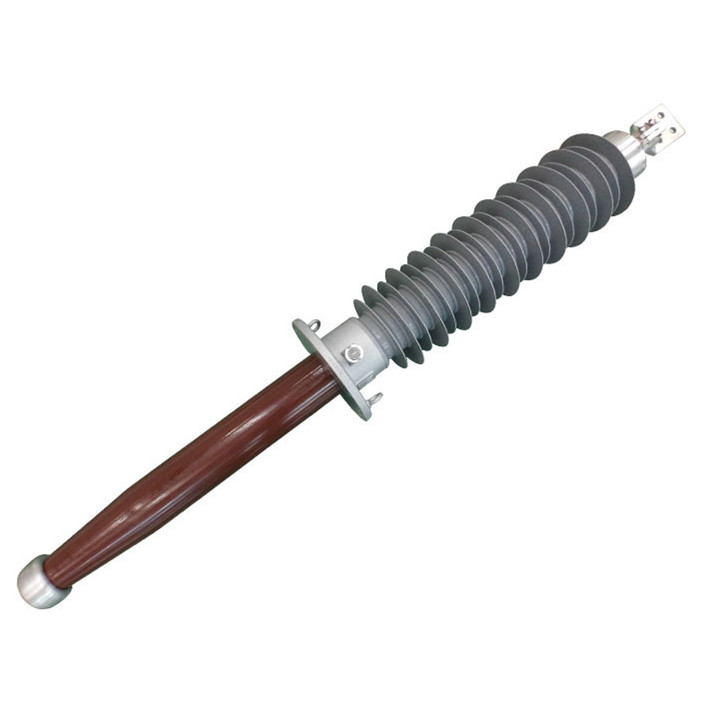




An oil-to-SF6 bushing connects an oil-filled power transformer directly to gas-insulated switchgear (GIS) or an SF6-insulated bus, with one end immersed in transformer oil and the other in SF6 gas. NJREC offers oil-to-SF6 bushings from 72.5 to 550 kV under IEC specifications and from 69 to 500 kV under IEEE specifications, with rated currents up to 2500 A. The RIP/RIS-based condenser core provides solid insulation and supports installation at any angle.

The bushing consists of an SF6-side interface, a transformer-side oil interface, a RIP/RIS-based condenser core, a glass fiber layer, a mounting flange, a test tap and a transformer-side anti-corona shield.
IEC 60137-2017
| Parameter | Unit | 72.5 | 100 | 123 | 145 | 170 | 245 | 300 | 362 | 420 | 550 |
|---|---|---|---|---|---|---|---|---|---|---|---|
| Highest voltage for equipment Um | kV | 72.5 | 100 | 123 | 145 | 170 | 245 | 300 | 362 | 420 | 550 |
| Rated frequency | Hz | 50/60 | 50/60 | 50/60 | 50/60 | 50/60 | 50/60 | 50/60 | 50/60 | 50/60 | 50/60 |
| Dry power-frequency withstand voltage (1 minute) | kV | 140 | 185 | 230 | 275 | 325 | 460 | 460 | 510 | 750 | 790 |
| Lightning impulse (BIL) | kV | 325 | 450 | 550 | 650 | 750 | 1050 | 1050 | 1175 | 1550 | 1800 |
| Switching impulse (SIL) | kV | - | - | - | - | - | 850 | 850 | 950 | 1175 | 1300 |
| Maximum rated current | A | 2500 | 2500 | 2500 | 2500 | 2500 | 2500 | 2500 | 2500 | 2500 | 2500 |
| Temperature range | °C | Down to -60°C and up to +55°C available on request | |||||||||
IEEE C57.19.01-2017
| Parameter | Unit | 69 | 115 | 138 | 161 | 230 | 345 | 500 |
|---|---|---|---|---|---|---|---|---|
| Highest voltage for equipment Um | kV | 69 | 115 | 138 | 161 | 230 | 345 | 500 |
| Rated frequency | Hz | 50/60 | 50/60 | 50/60 | 50/60 | 50/60 | 50/60 | 50/60 |
| Dry power-frequency withstand voltage (1 minute) | kV | 160 | 185 | 310 | 365 | 425 | 520 | 750 |
| Lightning impulse (BIL) | kV | 350 | 550 | 650 | 750 | 900 | 1175 | 1675 |
| Switching impulse (SIL) | kV | - | - | - | - | - | 825 | 1175 |
| Maximum rated current | A | 2500 | 2500 | 2500 | 2500 | 2500 | 2500 | 2500 |
| Temperature range | °C | Down to -60°C and up to +55°C available on request | ||||||


The central conductor carries current between the transformer and the GIS connection. The surrounding insulation separates the energized conductor from the grounded flange and equipment enclosure.
The condenser core grades the electric field through the insulation. The transformer-side anti-corona shield helps reduce local electric field concentration around the oil-side connection.
The bushing forms the electrical transition between the oil-filled transformer and the SF6-filled enclosure. Its mounting flange provides the mechanical connection at this interface.
The test tap provides access for capacitance and dielectric-loss measurements, supporting insulation condition checks during testing and maintenance.
Oil-to-SF6 transformer bushings connect power transformers directly to gas-insulated switchgear in transmission substations. The enclosed connection carries power between equipment that uses different insulating media.
These bushings also connect oil-filled transformers to SF6-insulated bus ducts. The oil-side terminal connects inside the transformer, while the gas-side terminal connects within the bus enclosure.
For substations with limited installation space, the oil-to-SF6 arrangement supports enclosed transformer connections. Installation at any angle gives equipment designers flexibility when positioning the transformer and GIS interface.
NJREC offers oil-to-SF6 bushings from 72.5 to 550 kV under IEC specifications and from 69 to 500 kV under IEEE specifications, helping transformer manufacturers and project buyers source products for different electrical systems.
NJREC offers a RIP/RIS-based condenser core for oil-to-SF6 connections. The solid core does not require a separate internal oil filling, while the two ends operate in transformer oil and SF6 gas.
NJREC helps transformer manufacturers, GIS integrators and project buyers select suitable voltage classes, insulation technologies and connection arrangements for transformer-to-GIS applications.
An oil-to-SF6 bushing connects an oil-filled transformer to SF6-insulated equipment. An oil-to-oil bushing connects two oil-filled compartments. The difference is the insulating medium surrounding each end.
Yes. This oil-to-SF6 bushing design supports installation at any angle, including horizontal, vertical and inclined positions, for different transformer-to-GIS layouts.
Yes. The RIP/RIS core has no separate internal oil filling to maintain, but the terminals, seals, test tap and insulation condition still require inspection. The connected transformer oil and GIS gas systems also remain part of equipment maintenance.
