

Introduction: An ANSI bushing manufacturer page brings product identification, ratings, applications, standards references, and supplier statements into one technical description.
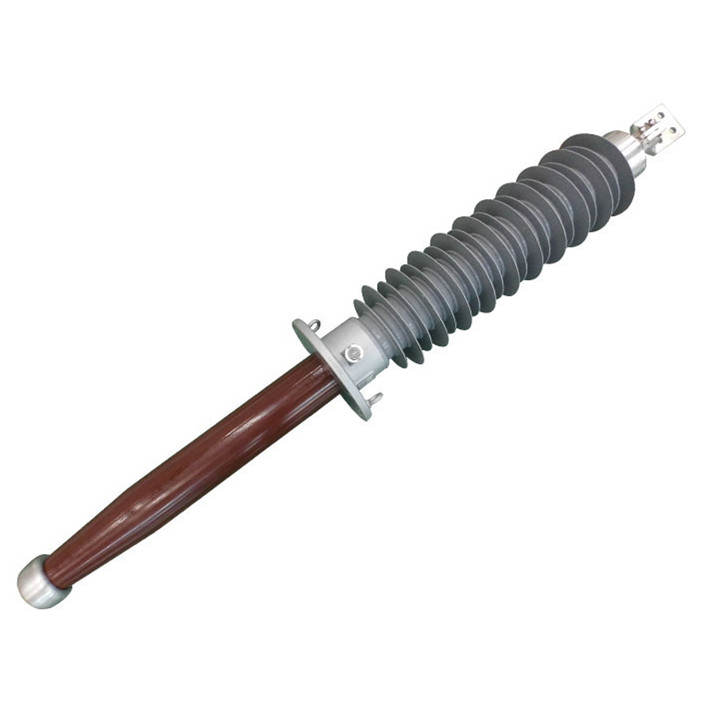
A useful reading method separates these information layers before any specification or application conclusion is made. This matters for a high voltage transformer bushing because a model number, an overview rating, a detailed parameter table, and a performance statement each serve a different purpose. The NJREC Wet-Process Porcelain ANSI Transformer Bushing provides a practical example. Its listing presents product number 00354, overview values of 15–27 kV and 50 A, broader tabled combinations, ANSI references, mentions of IEC and customer standards, light-gray glaze, several structural forms, and statements concerning maintenance and mechanical loading.
Read Product Information in Separate Layers
The first layer is identification. It includes the product family, product number, material, surface finish, and general construction. In this example, the identification layer contains product number 00354, the name Wet-Process Porcelain ANSI Transformer Bushing, a wet-process porcelain insulating body, and a light-gray glazed surface. These details establish what the listed item is and how the product family is described. The second layer is the overview rating. The listing presents 15–27 kV and 50 A as quick-reference values. These figures help determine whether the product belongs in the relevant electrical range during an initial review. They function as a screening point rather than a complete configuration record. The third layer is the technical table. It shows broader combinations that include approximately 5 kV to 34. 5 kV, 30 A to 1600 A, several BIL values, and multiple connector arrangements. The table therefore describes a wider set of possible configurations associated with the product family. Each voltage, current, BIL, connector, and dimensional combination needs to be matched with its specific model and drawing. The fourth layer is the supplier statement. The listing discusses high-voltage transformer systems, power transformers, substations, distribution networks, maintenance, structural simplicity, internal pressure, and cantilever loading. These statements explain the intended application and the supplier's presentation of the design. They belong alongside the product description as supplier-provided information, while formal engineering evidence has a separate role. This layered method creates a practical reading sequence: identify the item first, use the overview rating for an initial range check, study the table for configuration signals, and then treat application or performance wording as supplier statements. The product name answers “What is it? ” The overview values answer “What electrical range is highlighted? ” The table answers “Which combinations appear in the product family? ” Drawings and technical records answer “Which exact build applies? ”
How Model Numbers and Ratings Relate to Exact Configurations
1. Product number 00354 identifies a listed item while drawings define its physical build
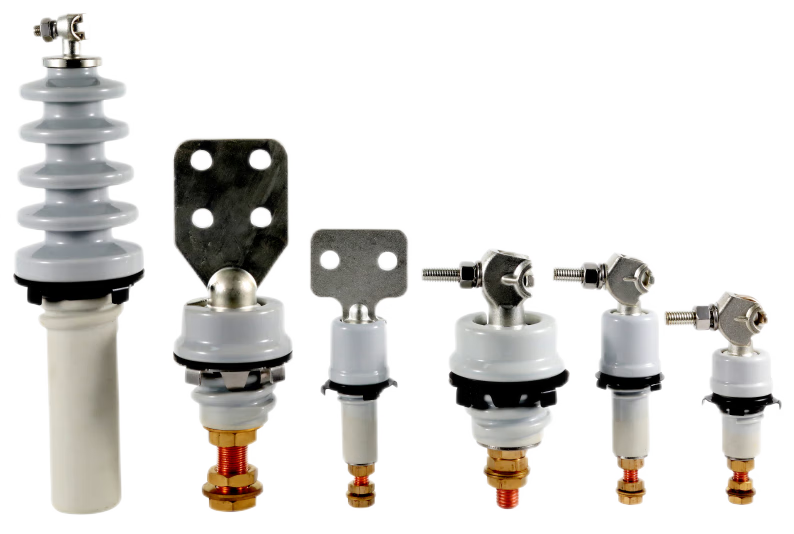
Product number 00354 anchors the description to a named NJREC item. It is more specific than a generic search for an ANSI transformer bushing and connects the product name with the wet-process porcelain and light-gray glaze descriptions. The listing also refers to cylindrical, tapered, and straight-tube forms, giving useful clues about the range of physical designs. A model number remains an identification reference. A complete transformer bushing drawing supplies the dimensions, flange details, mounting interface, connector geometry, hole pattern, threaded features, and model-specific notes required for technical matching. The same product family can contain configurations that vary by voltage, current, BIL, connector style, overall length, or mounting form. For a replacement project, the number should therefore be read together with the existing equipment information and the applicable drawing. The connector terms provide another useful example. The listing includes eyebolt, spade connector, sidewall threaded, and terminal post references, as well as different spade hole patterns and sizes. These terms identify interface options. They become meaningful for installation only when their dimensions, orientation, fastening method, and relationship to the transformer connection are documented.
2. Overview values provide a quick range while table rows support configuration comparison
The 15–27 kV and 50 A overview values provide a concise starting point. The technical table presents a wider range, including voltage entries such as 5 kV, 8. 7 kV, 15 kV, 18 kV, 25 kV, 30/34 kV, and 34. 5 kV; current entries from 30 A to 1600 A; and BIL values including 75 kV, 95 kV, 110 kV, 125 kV, 150 kV, and 200 kV. These two sections serve different reading jobs. The overview supports rapid product-family screening. The table supports comparison among possible variants. Treating the overview as a short summary and the table as a configuration map preserves the meaning of both sections. It also prevents a reader from combining every listed value into one assumed specification. BIL, voltage, current, connector type, and physical dimensions should be reviewed as a coordinated set. A technically suitable replacement requires the correct electrical level as well as the correct interface and structure. The same principle applies when reviewing an ANSI bushing manufacturer or transformer bushing supplier: a headline rating may identify the relevant range, while the exact selection depends on model-level documentation.
How Supplier Statements, Standards, and Technical Records Work Together
Supplier statements help explain intended use and design emphasis. The NJREC listing describes an integrated wet-process porcelain structure, relatively few structural parts, simpler design, and maintenance-related advantages. It also presents the product for high-voltage transformer systems and related power equipment. These statements are useful for understanding how the product is positioned and which engineering questions deserve attention. Mechanical loading and internal-pressure wording should be read in the same way. Such language identifies design characteristics described by the supplier. Numerical load ratings, pressure limits, test conditions, acceptance criteria, and inspection results require the corresponding technical records. This distinction keeps a product description accurate while preserving the role of engineering evidence. The listing names ANSI and mentions IEC and customer standards. A standards reference identifies the technical framework associated with the description. IEC 60076-5:2006 provides a formal reference point for transformer-related insulation coordination and dielectric considerations. ANSI/NETA standards and ANSI/NETA ATS describe testing and acceptance activities as distinct technical work supported by procedures and records. Together, these sources show why a standards name and a test record should be read as different information layers. Drawings define physical interfaces and model-specific dimensions. Parameter sheets organize ratings and configuration data. Test reports record test methods, conditions, and results. Inspection records document checks associated with manufacturing or acceptance. Conformity documents identify the applicable standard version and the basis for a compliance statement. Each document answers a different question, so a web description works best as an initial technical reference and a guide to the documents that should accompany final evaluation. For a replacement or new-equipment application, the most useful follow-up information includes the equipment type, rated voltage, rated current, BIL, connector form, hole pattern, thread details, flange and mounting dimensions, overall length, quantity, project location, and required standards documentation. Submitting those details through the product inquiry or quotation channel can support a more precise technical discussion and quotation.
Conclusion
An ANSI bushing manufacturer page is easiest to interpret as a set of information layers. Product number 00354 identifies the listed item. The wet-process porcelain body, light-gray glaze, and structural descriptions explain its basic construction. The 15–27 kV and 50 A overview values provide a quick range reference, while the broader table shows possible voltage, current, BIL, and connector combinations. Supplier statements describe intended use and design emphasis. Standards references point toward formal technical documents, testing records, and conformity evidence. This approach helps readers quote product facts accurately, distinguish supplier wording from technical records, and move to drawings and formal documentation when an exact engineering decision is required. For a project review, replacement assessment, or quotation request, the next step is to provide the relevant electrical, interface, dimensional, quantity, and documentation requirements.
FAQ
Q:What does an ANSI bushing manufacturer page usually describe?
A:It usually describes the product family, product number, insulating material, surface finish, overview ratings, structural forms, connector options, intended applications, and standards language associated with the product. A technical table may also show broader voltage, current, BIL, and connector combinations for comparison.
Q:Does product number 00354 replace a complete transformer bushing drawing?
A:Product number 00354 identifies the NJREC Wet-Process Porcelain ANSI Transformer Bushing listing. A complete drawing supplies the dimensions, connector geometry, mounting interface, flange details, hole pattern, and model-specific notes needed to define an exact build for installation or replacement.
Q:Do ANSI and IEC mentions on a listing prove certification?
A:ANSI and IEC mentions identify standards language associated with the product description. Certification status, test basis, standard versions, and conformity details are established through formal drawings, test reports, inspection records, or compliance documents tied to the applicable model.
Sources / References
ANSI/NETA Standards - InterNational Electrical Testing Association
ANSI/NETA ATS - InterNational Electrical Testing Association

