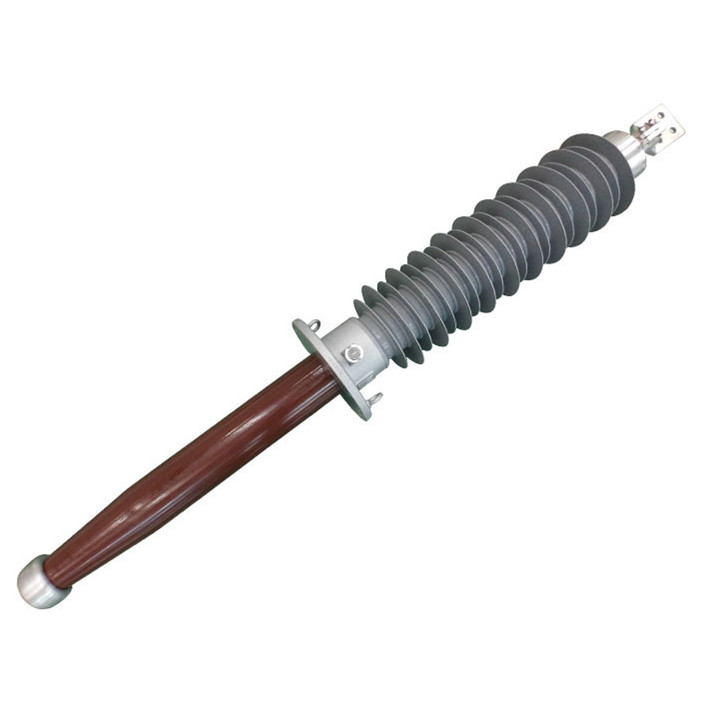
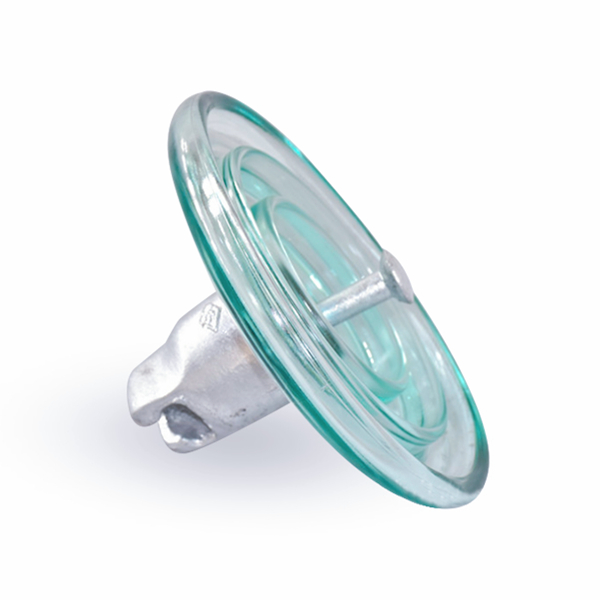
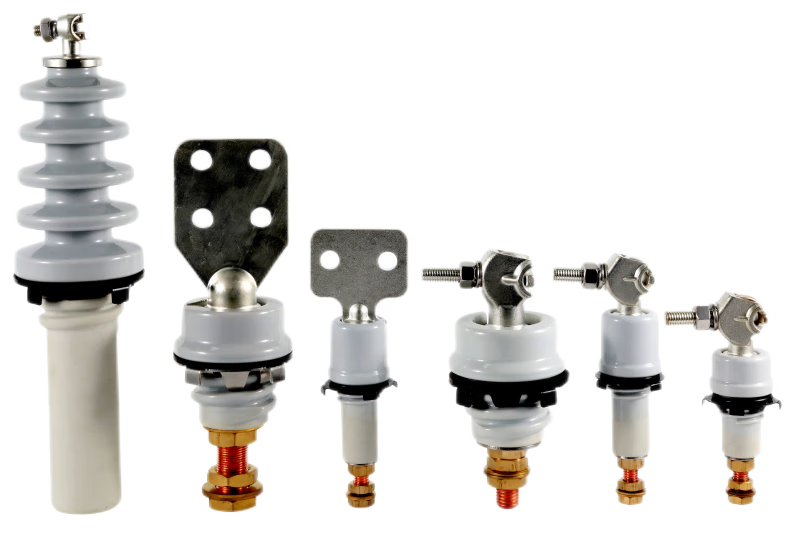
Electrical bushings allow current-carrying conductors to pass through grounded equipment enclosures while keeping the conductors electrically insulated from them. In a transformer, the bushing connects an internal winding to an external cable, busbar or overhead connection. Selecting the right transformer bushing requires matching the electrical ratings, insulation design, terminal arrangement and mounting dimensions to the equipment.
NJREC supplies DIN, EN and ANSI porcelain transformer bushings, alongside epoxy resin and condenser bushing options. This guide explains the main electrical bushing types and compares the NJREC porcelain series used when specifying new transformer connections or replacement bushings.
A basic electrical bushing consists of a conductor, an insulating body and the fittings needed for installation. The conductor carries current; the insulation separates it from the grounded tank or enclosure. In an oil-filled transformer, the mounting and sealing arrangement also helps retain the insulating oil and prevent moisture or contamination from entering the tank.
A bushing insulator must therefore do more than fit through an opening. Its insulation must withstand the specified electrical stresses, while its conductor and terminals must carry the required current without exceeding the permitted temperature rise. The complete assembly must also withstand the mechanical loads imposed by its connections.
Porcelain bushing insulators are used for transformer connections where the electrical rating, surface profile and installation dimensions suit the application. The porcelain provides an insulating surface between the energized terminal and the grounded mounting point. Its creepage distance and shed profile must be selected for the service environment.
A porcelain housing alone does not identify the internal insulation design. Many lower-voltage transformer bushings use non-condenser construction, while a high voltage bushing can use a condenser core inside a porcelain housing. Always check the complete design rather than choosing by appearance.
Epoxy resin bushings use cast resin insulation around the conductor. NJREC's epoxy resin bushing range covers 1–42 kV and 250–8000 A, depending on the model. Resin insulation should therefore not be described as limited to 12 kV and below. Confirm the selected design's intended indoor or outdoor service, connection interface and electrical ratings.
Condenser bushings use conductive grading layers within the insulation core to control the electric field. Core technologies include oil-impregnated paper (OIP), resin-impregnated paper (RIP) and resin-impregnated synthetic (RIS). Porcelain and silicone composite materials describe external insulation options, rather than interchangeable names for these core technologies.
For a power transformer bushing, assess both the core insulation and the media at its ends, such as oil-to-air or oil-to-oil. Explore NJREC's condenser and capacitive bushings when the application requires a capacitance-graded design.
DIN porcelain bushings are selected by the required standard series, electrical ratings and installation drawing. NJREC's range includes low voltage bushing options and higher-voltage series with different current capacities.

| DIN series | NJREC voltage range | NJREC current range |
|---|---|---|
| DIN 42530 | 1 kV | 250–3150 A |
| DIN 42539 | 3 kV | 250–4500 A |
| DIN 42531 / DIN 42532 | 10–30 kV | 250–630 A |
| DIN 42533 / DIN 42534 | 10–52 kV | 1000–3150 A |
| DIN 42541 | 24–36 kV | 5000–8000 A |
For example, DIN 42530 and DIN 42539 are separate series: the NJREC ranges are 1 kV and 3 kV respectively. They should not be combined into one interchangeable product specification. For a transformer LV bushing replacement, check the stem thread, tank opening, clamping arrangement, seals and internal connection as well as the electrical ratings.
NJREC's EN porcelain bushings cover three series. EN 50386 provides the listed 1 kV options, while EN 50180 and EN 50243 cover different voltage and current ranges for other transformer connection requirements.

| EN series | NJREC voltage range | NJREC current range |
|---|---|---|
| EN 50386 | 1 kV | 250–5000 A |
| EN 50180 | 12–36 kV | 250–3150 A |
| EN 50243 | 10–36 kV | 4500–8000 A |
When choosing medium voltage bushings, the standard designation is only part of the specification. Verify the voltage designation, impulse withstand level, creepage distance and mounting interface for the exact model. Similar electrical ratings do not establish dimensional interchangeability between DIN and EN products.
NJREC's ANSI porcelain transformer bushing range includes several terminal configurations. Selection should consider voltage class, current rating and BIL together with the connection required on each side of the transformer tank.

| Parameter | NJREC ANSI porcelain range |
|---|---|
| Voltage | 5–34.5 kV |
| Current | 30–1600 A |
| Basic impulse insulation level (BIL) | 75–200 kV |
| Connector options | Spade, eyebolt, sidewall threaded and terminal-stud connectors |
The bushing terminal must match the cable lug, busbar or other conductor connection. Confirm thread size, terminal dimensions, hole pattern where applicable, and installation clearances. The ANSI range above covers multiple configurations; it does not mean that every connector is available at every rating.
Range information: These tables summarize NJREC product-series ranges. They do not define the full scope of each standard or guarantee every voltage/current combination. Confirm the exact model, applicable standard edition, voltage designation, BIL and dimensions against the approved technical drawing and datasheet.
For a substation bushing application, identify the actual equipment first. A transformer tank bushing and a wall-through bushing can have different end media, mounting arrangements and insulation requirements, even when used at the same substation.
An insulator is a component that electrically separates conductive parts. A bushing is a specific insulated feedthrough that allows a conductor to pass through a grounded enclosure or partition. The terms “bushing insulator” and “insulator bushing” are often used for these components, but a purchase specification should clarify whether it requires only the insulating body or the complete conductor, insulation, fittings and seals.
Choose the material together with the insulation design and service conditions. Porcelain, cast epoxy and silicone composite insulation serve different designs. Transformer bushing insulation must be assessed by its electrical withstand levels, creepage, temperature limits and installation environment, rather than by material name alone.
Not solely because their voltage and current ratings are similar. Compare the required insulation levels, terminal arrangement, mounting dimensions, sealing details and applicable standard. Confirm an alternative against the transformer drawing before ordering.
Review NJREC's transformer bushing range to identify a suitable product series. For a quotation, provide the required standard, voltage, current, BIL or impulse withstand level, creepage distance, terminal type and installation drawing. For replacement projects, include the existing model designation and photographs of the connections.
These details help NJREC review the electrical and mechanical requirements and propose a suitable bushing configuration for your transformer.