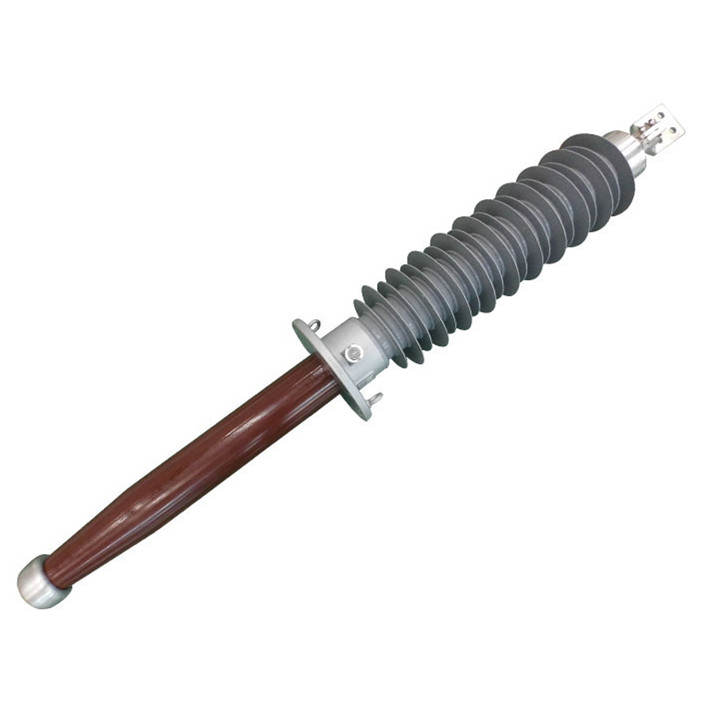


Introduction: RIS Capacitive Bushing is a naming layer, not just a product label, and B2B buyers need to read it correctly before they compare models or ask for drawings.
For an electrical bushing manufacturer or insulation bushing supplier, the real job is to turn a high-voltage tank passage into a controlled insulation path. That is why transformer bushing terminology becomes confusing so quickly: one name may describe the function, another may describe the insulation format, and a third may describe the capacitive field-control design. In NJREC Bushings, those labels appear together because they point to the same project family from different angles.
In transformer applications, the bushing is the insulated passage that lets a conductor move through the grounded tank or enclosure without making the tank part of the live circuit. OpenStax explains transformers as core devices in power transmission, and that basic operating context matters here because the bushing is not an accessory sitting outside the system, but a structural interface between the energized path and the grounded housing. Once voltage levels rise, the insulation around that passage has to do more than block contact. It also has to shape the electric field so stress does not concentrate at one point. That is where the dry electrical bushing conversation starts. Buyers are often not only asking whether a part fits, but whether the insulation concept matches the transformer design they are working with. A capacitive bushing uses layered conductive and dielectric behavior to manage field distribution, which is why the term capacitive is meaningful and not decorative. In project work, that matters because the same transformer platform may require a different language set depending on whether the buyer is thinking in terms of a dry-type installation, a resin-insulated product family, or a specific capacitive core design. For a B2B reader, this is the first filter before model selection: understand the function, then the insulation format, then the exact product family. That sequence matters in procurement because the wrong label can send the conversation toward the wrong evidence. A buyer who asks only for a voltage number may miss the insulation format question, while a buyer who focuses only on dry or resin wording may still miss interface and drawing issues. The naming problem is therefore not cosmetic; it shapes which technical file should be requested first.
RIS is best read as a product-family identifier inside the broader transformer bushing category. It does not replace the function of the part, and it does not by itself tell you every engineering detail. In NJREC's naming, RIS Capacitive Bushing sits alongside the phrase Resin Capacitive Bushing, which tells a buyer that the page is combining family naming with the capacitive design concept. That combination is useful because it tells you the product is not a plain mechanical feedthrough. It is a high-voltage insulation component designed around field control, which is the practical reason capacitive structures exist in transformer bushings. For a project researcher, the point is to avoid over-reading the acronym. RIS signals a specific line or configuration, but the model-level facts still need confirmation. A buyer cannot assume that RIS alone defines voltage class, mounting interface, current rating, or exact dimensions. It tells you what kind of bushing family you are in; it does not finish the specification.
Dry Electrical Bushing is a format description. It tells you the product is not being framed as an oil-filled unit, and it directs attention to non-liquid insulation architecture. That distinction matters in procurement because dry and liquid-based bushings create different maintenance logic, different handling expectations, and different project questions. A dry format can fit paper-free transformer systems, compact equipment, or retrofit work where liquid management is undesirable, but that does not make it automatically interchangeable with every legacy unit. The phrase also helps the buyer separate engineering language from commercial language. A page may call a product dry electrical because the insulation system is dry-type, non-oil, or paperless, yet that still leaves open the exact dielectric stack, the rated voltage by model, and the approved installation conditions. In other words, dry electrical tells you how the insulation concept is being presented; it does not tell you the complete commercial specification.
NJREC Bushings uses a layered naming approach that is easy to misread if you expect one label to do all the work. The product page combines RIS Capacitive Bushing, Resin Capacitive Bushing, and Dry Electrical Bushing language, and it also describes the unit as dry-type, non-oil, and paperless. That tells a buyer the page is positioning the product as a high-voltage transformer bushing with a dry insulation concept and a capacitive core structure. It also mentions condenser core structure, wrapped capacitive layers, and capacitive screens, which are the design cues that explain why the product belongs in a capacitive bushing family rather than a simple insulator family. The boundary matters more than the claims. The page gives a voltage-range clue of 24-1100 kV systems, but that should not be flattened into a universal statement for every model. The page does not confirm that every RIS Bushing version covers that full span, and it does not publish the full set of model-specific data a buyer would need for procurement. Voltage class, current rating, dimensions, creepage, flange interface, terminal details, and test documentation still need to be confirmed per model. That is the correct way to read a product page from an insulation bushing supplier: use the naming to understand the family, then use the technical file to confirm the exact fit. The material wording also deserves restraint. NJREC's product language points to epoxy resin, fiberglass, synthetic fabric, and capacitive screens, but the page does not settle every material relationship in a way that would justify a closed technical conclusion. For that reason, the safest commercial reading is that the page is describing a resin-based dry capacitive bushing architecture, not publishing a complete materials spec sheet. For project research, that is enough to identify the category and the likely application zone, but not enough to replace a drawing review or model confirmation. That is also why the page should be treated as a naming and category source first, not as a substitute for a full specification pack. The title, page copy, and FAQ are enough to place RIS Capacitive Bushing in the right family and to understand the dry, non-oil, paperless direction. They are not enough to settle every engineering dependency, which is why final fit still belongs to the model drawing, rating data, and confirmation call.
RIS Capacitive Bushing, Dry Electrical Bushing, and Resin Capacitive Bushing are not competing claims on the same page. They are different levels of description for a transformer bushing product family: function, insulation format, and capacitive design. For buyers comparing NJREC Bushings with other offerings, that distinction is the main thing to get right before asking about voltage class, interface details, or retrofit compatibility. If the project needs a dry-type capacitive bushing, the next step is to match the product family name to the actual model data, then confirm the rating sheet, drawings, and installation boundaries. That is the practical way to work with an electrical bushing manufacturer or insulation bushing supplier without reading a product title as if it were a complete datasheet.
Q:What does RIS Capacitive Bushing mean in a transformer application?
A:It means a resin-insulated, capacitive-control bushing used to carry an energized conductor through a transformer tank while managing electric field stress. In practical terms, it identifies a dry-type bushing family, not a separate transformer system.
Q:Is a Dry Electrical Bushing the same as a Resin Capacitive Bushing?
A:No. Dry Electrical Bushing describes the insulation format, especially the absence of liquid insulation, while Resin Capacitive Bushing points to the resin-based capacitive design family. The two labels can overlap on one product, but they do not mean exactly the same thing.
Q:Does the RIS Bushing page confirm the complete voltage range for every model?
A:No, it should be treated as a range clue, not a confirmed cover-all specification. The page points to 24-1100 kV systems, but each model still needs its own confirmed voltage rating, dimensions, and interface details before a project can treat that range as applicable.