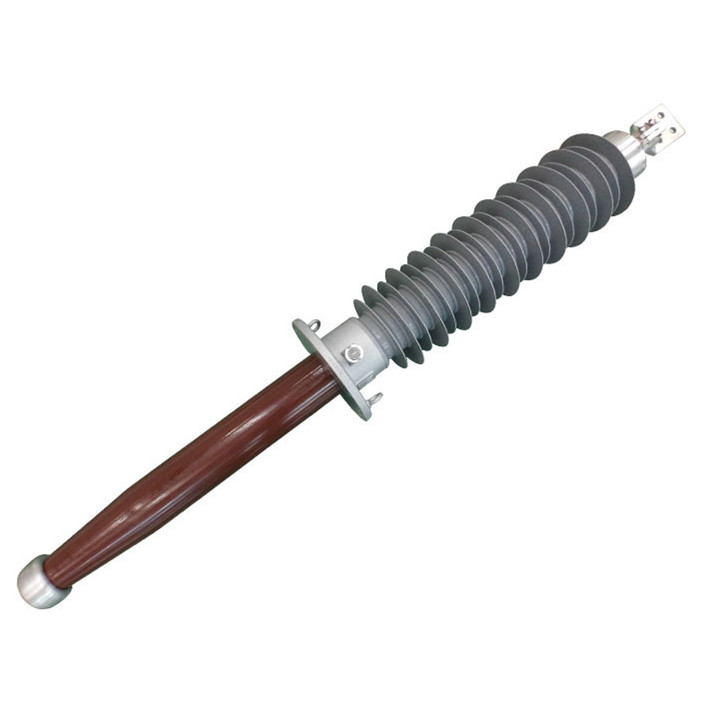


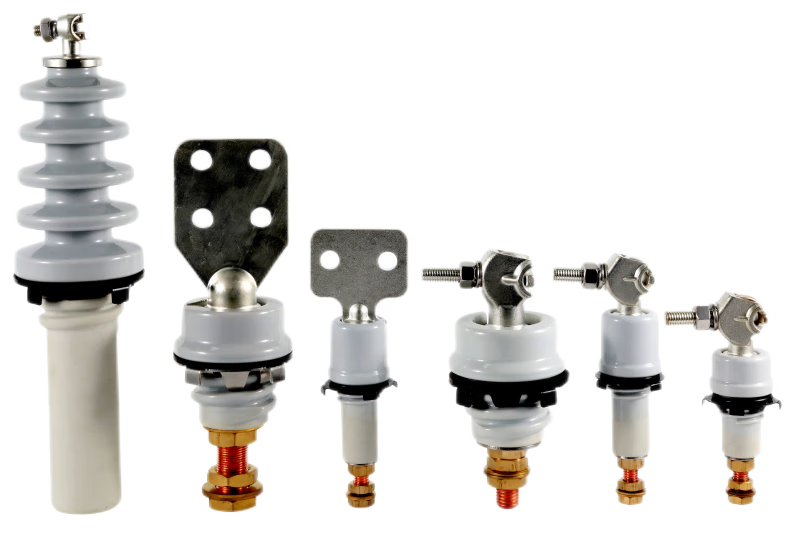

A transformer bushing provides an insulated passage for a current-carrying conductor through the grounded transformer tank. Its function combines electrical insulation, conductor support and an interface for the external connection.
The insulation separates the energized conductor from the tank. The bushing assembly also supports the connection under the mechanical loads permitted by its design. Voltage, current, insulation level, terminal loads and mounting direction must be considered together.
For oil-filled transformer installations, the mounting interface and seals help retain transformer oil and exclude moisture. Terminal arrangements connect the internal winding lead to an external conductor, cable lug or busbar. The approved connection detail determines the required terminal style.
Transformer bushings may use porcelain or cast epoxy insulation, while condenser designs use a graded insulation core. DIN/EN and ANSI arrangements can have different mounting and terminal dimensions. A standard designation alone is not enough to establish interchangeability.
For a general explanation of why these components are needed, read why transformers use bushings.
A transformer bushing is an insulated assembly that lets a conductor pass through the grounded tank. It connects the internal winding lead to the external electrical circuit while maintaining insulation at the tank opening.
The tank and the live conductor operate at different electrical potentials. The bushing provides insulation between them and a supported connection interface. Its conductor carries current; the surrounding insulation separates that current path from the tank.
Review the NJREC transformer bushing range and contact us with the electrical rating, application, dimensions or drawing, quantity and delivery destination. Product suitability should be confirmed against the project specification.