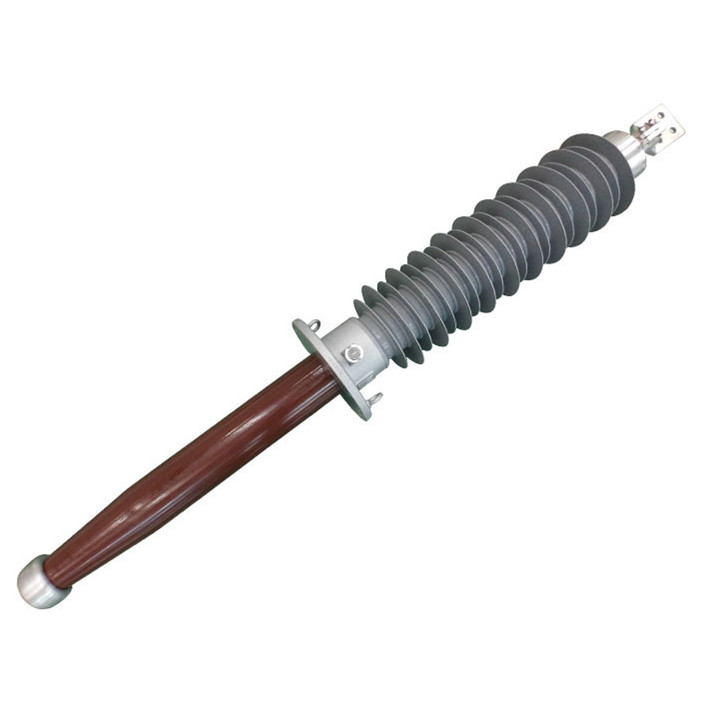
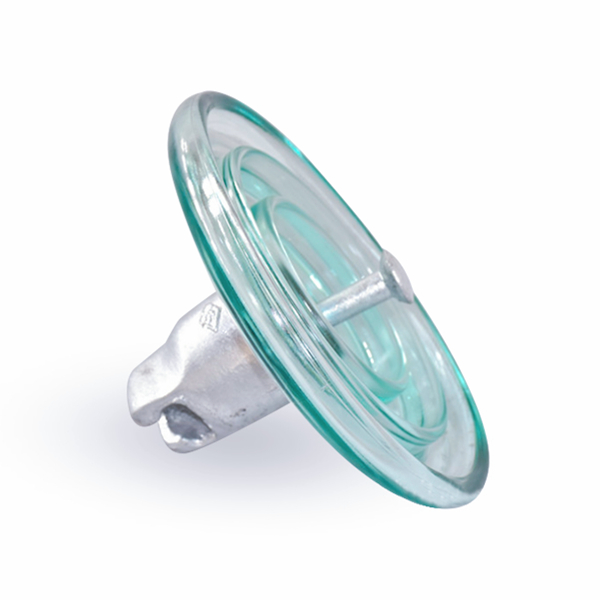
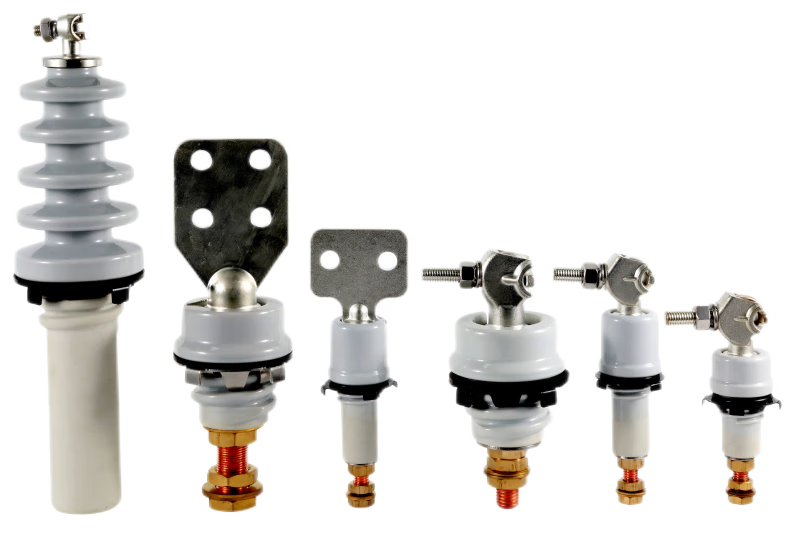
Transformers use bushings because energized conductors must pass through the grounded tank or enclosure without making electrical contact with it. A bushing provides the insulated passage and an interface between the internal winding connection and the external circuit.
The bushing insulation separates the conductor from the tank. Its electrical rating and insulation level must suit the transformer and the operating environment. Condenser designs use grading layers to control electric-field distribution within the main insulation.
The bushing assembly supports the conductor connection within its specified mechanical limits. Terminals connect the winding lead to external cables, busbars or other conductors. Terminal type and mounting dimensions are important in new equipment and replacement work.
In a power transformer, the bushing passes the winding lead through the tank wall while keeping the energized conductor insulated from the grounded metal. The terminal connects that lead to a cable or busbar outside the transformer; the terminal alone cannot provide the insulated tank passage.
For oil-filled transformer installations, the mounting interface and seals help retain insulating oil and limit moisture ingress. Sealing details vary by design and must be checked against the drawing and installation instructions.
Porcelain and cast epoxy bushings serve suitable transformer connection duties. OIP, RIP and RIS condenser bushings use different main insulation technologies. The choice depends on voltage, current, insulation duty and the operating interface.
A RIP bushing has solid main insulation, but one end may still operate in transformer oil. Dry-type core insulation and the surrounding operating medium are separate characteristics.
The mounting location also matters: a wall bushing and a transformer bushing serve different barrier and operating interfaces. Check the drawing before selecting one as a replacement for the other.
A bushing carries an insulated conductor connection; it does not itself change the transformer turns ratio. Voltage adjustment is performed by the winding tap arrangement and tap changer where fitted.
It is the insulated component that carries a conductor through the transformer tank or enclosure. It connects an internal winding lead to the external circuit while maintaining electrical separation from the grounded barrier.
The insulation prevents the energized conductor from contacting the tank. Depending on the design, the bushing also provides a mounting interface, terminal support and sealing at an oil-filled tank.
No. Electrical ratings, terminals and mounting details must match the specified transformer connection.
Provide the existing bushing drawing or model, electrical ratings, flange and terminal dimensions, operating interface and installation conditions.
Review the NJREC transformer bushing range and contact us with the electrical rating, application, dimensions or drawing, quantity and delivery destination. Product suitability should be confirmed against the project specification.
For the wider equipment context, see transformer parts and accessories. IEC 60137:2017 sets characteristics and tests for applicable insulated bushings above 1,000 V; use the project specification to confirm the required standard.