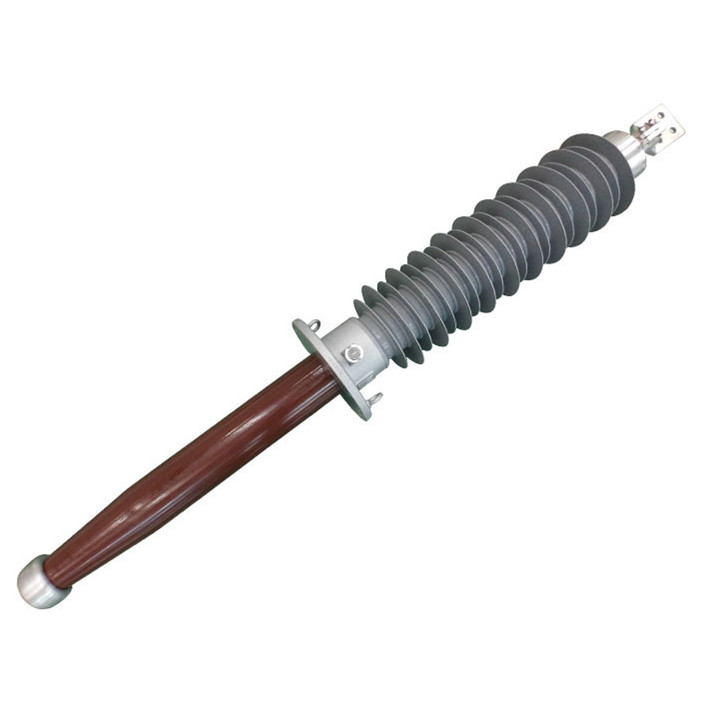
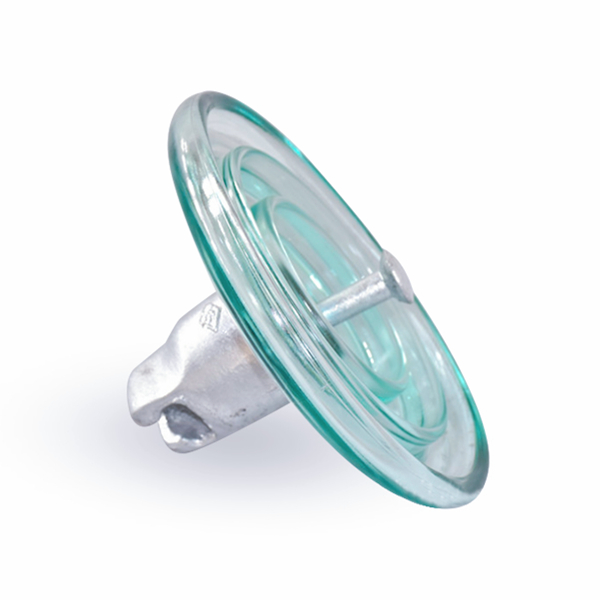
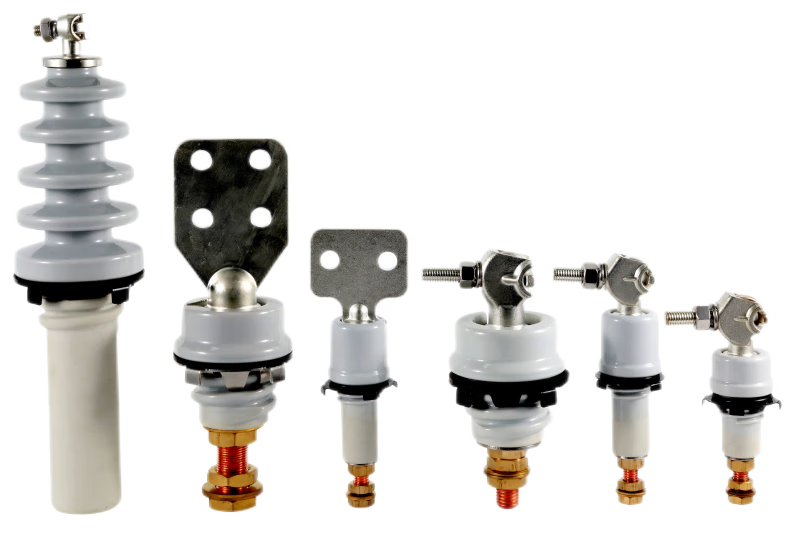
Transformer bushing materials should be described in two separate ways: external insulation or housing, and internal insulation technology. Porcelain and composite describe external arrangements, while OIP, RIP and RIS describe the main insulation core. They are not interchangeable classification labels.

| Material | Description | What to check |
|---|---|---|
| Porcelain | Ceramic external insulation used in several bushing designs | Profile, creepage, mechanical duty and dimensions |
| Composite | Polymer housing, commonly with silicone rubber sheds | Housing construction, sealing and environmental duty |
| Cast epoxy | Solid cast insulation used in suitable equipment connections | Electrical ratings, interface dimensions and installation conditions |
When comparing electrical bushing types, first identify the external housing, the insulation core and the operating interface. A porcelain housing, for example, does not by itself tell you whether the core is OIP or RIP.
OIP means oil-impregnated paper. The paper condenser core is impregnated with insulating oil. RIP means resin-impregnated paper: the paper core is impregnated with resin and cured into solid insulation. RIS means resin-impregnated synthetic: synthetic reinforcement replaces paper in the specified resin system.
A condenser bushing uses conductive grading layers to control electric-field distribution. Condenser construction and housing material should be stated separately when requesting a quotation.
A solid RIP core may be used in a bushing with one end operating in transformer oil. Dry-type describes the main insulation, not a universal requirement that the whole bushing must operate in air. Oil-air, oil-oil and oil-gas interfaces are separate selection details.
For a focused comparison, see RIP vs OIP bushings or the capacitive bushing range. For a solid-core product example, see the NJREC RIP condenser bushing.
For general bushing requirements and tests, consult IEC 60137 on the official IEC Webstore; the applicable edition and project specification govern selection.
Review the NJREC transformer bushing range and contact us with the electrical rating, application, dimensions or drawing, quantity and delivery destination. Product suitability should be confirmed against the project specification.