

Introduction: Choosing an ANSI bushing manufacturer for a transformer project requires a documented link between product scope, engineering information, testing, standards, and project response.
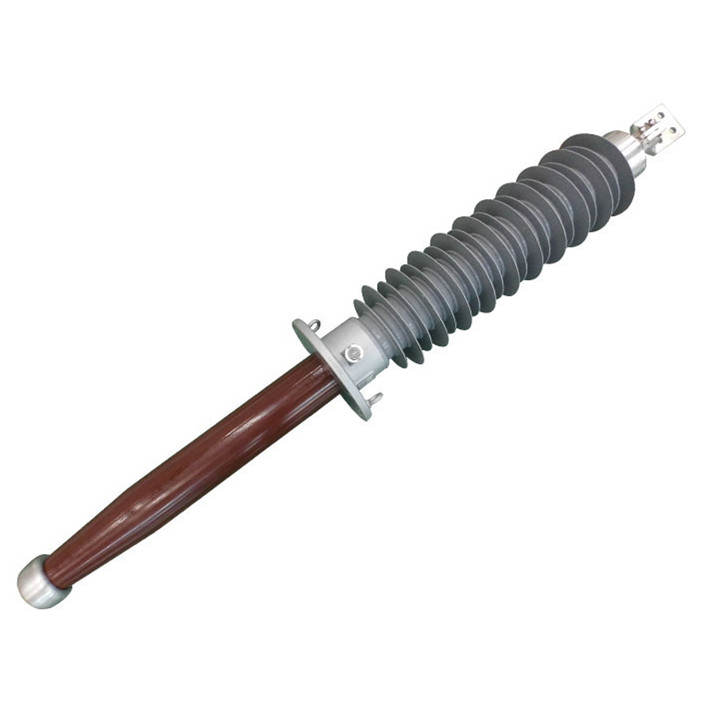
NJREC publicly presents itself as a manufacturer and supplier of electrical insulators and transformer bushings. Its High Voltage ANSI Bushing is identified as product 00354, a Wet-Process Porcelain ANSI Transformer Bushing. The product information mentions ANSI, IEC, and customer standards, together with research, design, manufacturing, testing, supply, technical support, delivery, and after-sales support. These public statements establish a useful starting point for supplier discussions; formal drawings, data sheets, test records, and quality documents establish the basis for project qualification.
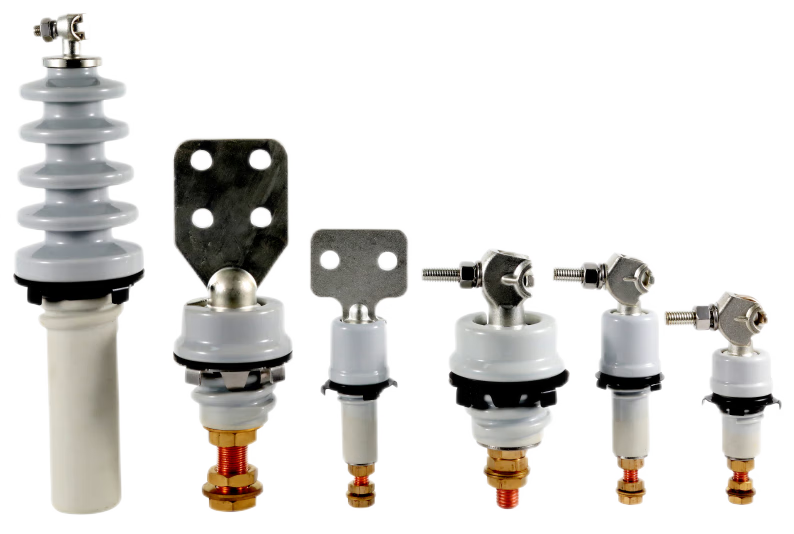
A manufacturer label becomes meaningful when the supplier can connect its product range to the actual transformer application. The review should begin with the equipment context and then move toward the proposed bushing configuration. Relevant questions include the transformer type, rated voltage, rated current, BIL, connection arrangement, mounting position, dimensions, and applicable customer or industry standard. A supplier response is more useful when each requirement is connected to a drawing, data-sheet value, test method, or written technical explanation. NJREC identifies product 00354 as a wet-process porcelain transformer bushing with a light-gray glazed surface and an integral structure. The public product information mentions cylindrical, tapered, and straight-tube forms, as well as connection options such as eyebolt, spade connector, sidewall threaded connection, and terminal post. These details indicate a range of possible configurations for discussion. The specific model, drawing, and formal quotation should establish which combination applies to a project. Engineering support matters most when the equipment has a constrained interface or a customer-specific specification. For a new transformer design, the supplier may need to review the tank opening, conductor arrangement, mounting space, and required clearances. For a replacement project, the comparison should include the removed bushing’s overall length, mounting dimensions, connection position, flange or threaded interface, and electrical ratings. For a substation or distribution project, the supplier response may also need to address customer standards, document revisions, inspection requirements, and deviations. A practical evaluation therefore follows a capability ladder. First, confirm that the supplier discusses the relevant transformer bushing type. Second, match the proposed configuration to electrical and mechanical requirements. Third, request controlled technical documents for that configuration. Finally, record project-specific questions and responses so procurement, engineering, and quality personnel evaluate the same item.
A technical file should connect the quoted product, approved configuration, tested item, and delivered component to one consistent reference. Drawings establish physical fit, data sheets establish the ratings associated with that configuration, and test or inspection records show how defined characteristics were examined. Industry testing guidance and transformer insulation standards provide useful context for deciding what information belongs in a project review. [ANSI/NETA Standards](https://www. netaworld. org/standards) and [ANSI/NETA ATS](https://www. netaworld. org/standards/ansi-neta-ats) distinguish testing and acceptance activities according to their application, while [IEC 60076-5:2006](https://webstore. iec. ch/en/publication/603) provides transformer insulation and dielectric-test context.
A configuration drawing turns a product description into an installable component. It should identify overall dimensions, mounting arrangements, connection details, hole patterns, threads, flange information, critical clearances, and the orientation relevant to installation. The accompanying data sheet should associate the electrical and mechanical ratings with that drawing. For a transformer bushing, this connection allows the project team to compare voltage, current, BIL, connection form, length, and installation requirements against the transformer specification. The NJREC page lists multiple voltage and current combinations, different BIL values, several connection forms, and an integral length of up to 2800 mm. The length statement should be treated as a product-information range linked to specific configurations rather than a universal dimension. Procurement should request the drawing that applies to the quoted item and compare it with the transformer tank drawing, customer specification, and available installation space. This comparison is especially important when a project uses a replacement component. A nominal voltage match cannot resolve a different hole pattern, thread, conductor position, flange dimension, or overall length. In a new-equipment project, the same review helps prevent a bushing that satisfies an electrical requirement from creating a mechanical integration problem.
A test report has practical value when it identifies what was tested, how it was tested, and which product or sample the result represents. Useful fields include the product or sample identification, serial or batch reference where applicable, test date, test scope, test method, applicable standard and revision, acceptance criteria, measured result, and responsible laboratory or personnel. Testing categories support different decisions. Routine evidence relates to a defined production item or batch and can support release or inspection of that item. Type evidence provides design-level information for a product family or configuration. Project-specific evidence addresses a customer’s stated configuration or acceptance requirement. A factory production record and an acceptance test for newly installed equipment therefore serve different purposes, even when both contain electrical measurements. Quality documentation can extend beyond a test report. An inspection plan, dimensional inspection record, material information, nonconformance record, and document revision list can help establish how the supplied bushing was controlled. The key is traceability: the report should identify the tested item, the approved drawing, the applicable requirement, and the result that supports the project decision. A document with no clear sample, date, method, or acceptance basis gives the review team little technical evidence.
Standards communication should identify the applicable document, edition or revision, product scope, test basis, and customer acceptance criteria. A quotation that mentions ANSI or IEC gives the project a standards direction, while the formal review determines which requirements apply to the proposed configuration. The response should connect each claimed standard to the relevant drawing, data sheet, test record, or compliance document. If the customer specification differs from the supplier’s normal design, the response should record the deviation and its technical effect. Clear questions may concern a missing installation dimension, an unclear conductor arrangement, an unspecified BIL value, or a connection detail that appears in the product table but not in the quotation. Written answers create a durable technical record for engineering and quality review. Consider two suppliers offering porcelain transformer bushings with similar nominal voltage. One provides only a short product description. The other identifies the quoted configuration, links it to a drawing and data sheet, states the test basis and revision, and lists deviations for resolution. The second response gives the project team a stronger comparison because engineering can review physical and electrical fit, quality can assess the records, and purchasing can compare equivalent supply scopes. NJREC provides Request Quote and contact channels for product and application discussions. A useful inquiry can include the transformer application, required voltage and current, BIL, connection type, installation dimensions, quantity, destination, project schedule, applicable customer standard, and required quality documents. Request test and quality records when the component moves into supplier approval, purchase review, or customer documentation review. Price, quantity, packaging, shipping, production timing, and payment terms should be handled as separate commercial confirmations.
Evaluating an ANSI bushing manufacturer involves product scope, engineering support, traceable documentation, defined testing, and standards communication. NJREC publicly identifies product 00354 as a Wet-Process Porcelain ANSI Transformer Bushing and presents multiple electrical and connection options for project discussion. The next practical step is to request the configuration drawing, applicable data sheet, test records, quality documents, standard revision, and written response to project conditions. Submit the transformer application, electrical parameters, interface details, quantity, destination, and document requirements through the NJREC Request Quote or contact channel to begin a project-specific review.
A:Request the proposed configuration drawing, data sheet, applicable standard and revision, test records, quality documents, and a written list of deviations or technical questions. Provide the transformer application, voltage, current, BIL, connection form, installation dimensions, quantity, destination, schedule, and customer document requirements so the supplier can evaluate the intended configuration.
A:The most useful documents are a configuration drawing, electrical and mechanical data sheet, material information, dimensional inspection records, routine or type-test reports, and project-specific acceptance documentation. Together, these documents connect the proposed bushing to its dimensions, ratings, test basis, revision status, and quality review requirements.
A:A test report should identify the tested product or sample, batch or serial reference where applicable, test date, test scope, method, applicable standard and revision, acceptance criteria, measured results, and responsible laboratory or personnel. It should also state whether the record represents routine, type, or project-specific testing.
ANSI/NETA Standards - InterNational Electrical Testing Association
ANSI/NETA ATS - InterNational Electrical Testing Association