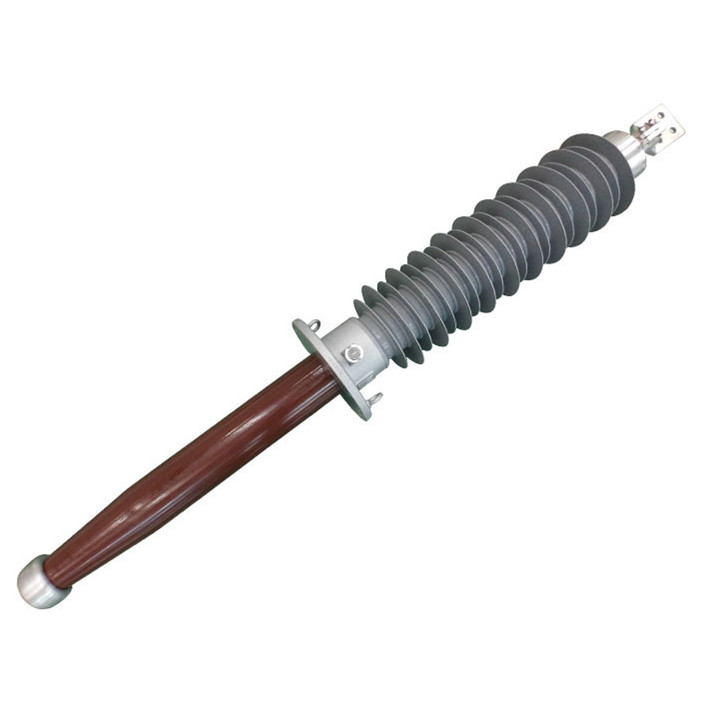
A RIP condenser bushing uses resin-impregnated paper cured into a solid insulation core. Grading layers control the electric-field distribution. In transformers and reactors, the bushing provides an insulated conductor connection through the grounded equipment enclosure.
RIP condenser bushings are mainly used for power transformers/reactors, working as the current carrying conductors for pulling in or drawing high,medium and low voltage side current of transformers/reactors, and playing a role of insulation for oil tank shell of transformers/reactors.
Advantages of RIP Bushings:
1.Unique resin system and special buffer strips
2.Controlled manufacturing and inspection are important to the electrical, thermal and mechanical performance of RIP
bushings series.
3.The lower weight and smaller volume make it easy for transportation, erection and maintenance.
4.Solid main insulation reduces reliance on liquid impregnation oil. Operating-medium compatibility and safety requirements still depend on the specified design.
5.Service performance depends on correct selection, installation and the specified inspection practices.
The regular specifications of RIP bushings are as below:
40.5 kV - 550 kV RIP air to oil transformer bushing
RIP oil-to-SF6 transformer bushing (confirm the available voltage rating by model)
For a RIP bushing enquiry, identify whether the interface is air-to-oil, oil-to-oil or oil-to-gas, then confirm the voltage class, rated current, insulation level, terminal and flange dimensions, and test documentation for the exact model.
Specify voltage, current, insulation level, operating interface, mounting direction and terminal arrangement. A solid RIP core can be used with an end immersed in transformer oil; dry-type does not mean that the complete bushing operates only in air. Confirm model-specific ratings and dimensions against the approved technical drawing.